
May Garden Tasks: What To Do in the Garden This Month
May Garden Tasks: What To Do in the Garden This Month
May is such an exciting time in the garden. It’s when the garden finally comes alive, and all kinds of fun things are happening. The soil warms up, plants start putting on real growth, and it feels like everything needs to be done at once. It’s exciting, but it can also feel like you’re already behind if you don’t have a plan.
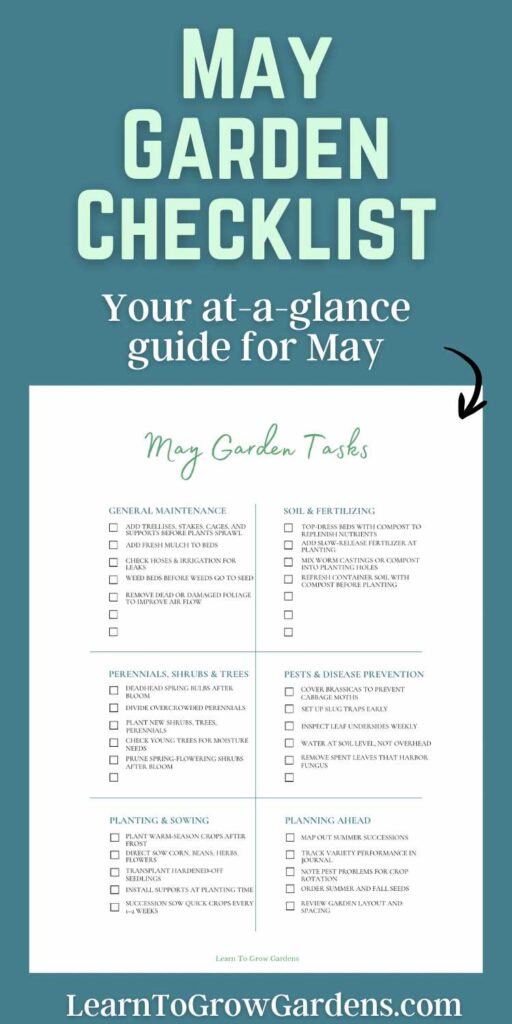
This month is all about planting warm-season crops, supporting fast-growing spring plants, and staying ahead of weeds and pests before they take over. A clear checklist helps you stay focused so you can enjoy the season without feeling overwhelmed, so that’s exactly what I’ve created for you. You can print it out and add it to your garden journal and stay on top of tasks all month long.
Since growing zones vary, timing will look a little different depending on where you live. For example, I garden in Michigan in Zone 6 with an average last frost in mid May, so many warm-season crops can’t go in the ground until later in the month. My family in coastal Carolina gardens in Zone 8, and their last frost is usually in late March, which means they plant many of these same crops weeks earlier than I would. Always check your frost dates before planting so you can follow these tasks at the right time for your climate. (You can check your frost date HERE.)
If you missed last month’s post, you can check out April Garden Tasks here, and when you’re ready, jump ahead to June Garden Tasks to stay on track. You can also view the full Month-by-Month Gardening Guide if you want a year-round roadmap. And be sure to grab my Garden Planning Starter Kit. It’s your free 26-page Garden Planner, designed to help you map out your garden beds, choose your plants, and stay organized all season long.
Before diving into May’s garden tasks, it may help to take a step back and think about your overall garden goals for the year. If you’d like guidance on setting clear, realistic garden goals you can find that here.
General Maintenance
As temperatures warm up, garden chores shift from planning and prepping to maintaining what’s already growing. The work you do now keeps weeds and pests under control and sets your plants up for steady growth as summer approaches.
Start by making sure your garden structures are in place before plants get too large. Add stakes, cages, trellises, and supports early so you’re not trying to wrestle them around tumbling, delicate vines later in the season.
This is also a good month to refresh mulch. A two to three inch layer helps retain moisture, keeps weeds down, and protects soil as temperatures rise. If you already have a good layer of mulch on your beds, I like to fluff it up with a rake to break up any clumps. This helps water move evenly through it. I then top it off with a one inch fresh layer so it looks renewed.
If you use hoses, drip lines, or soaker hoses, check everything for leaks or clogs before the heat sets in. Fixing issues now means more efficient watering later.
Finally, stay ahead of weeds while they’re still small. Pulling weeds now prevents them from going to seed, which saves a lot of work later in the season. It’s also easier to pull weeds early, before they’ve had a chance to set deep roots.
Soil & Fertilizing in May
Healthy soil is the foundation of a productive garden, and May is a good time to give your beds a boost as plants enter their main growth phase.
Instead of frequent liquid feedings, I rely on compost, worm castings, and slow-release fertilizers like Garden-tone or Tomato-tone. These release nutrients gradually and support steady growth without overwhelming young plants.
Start by top-dressing your beds with a thin layer of compost, especially if the soil has settled since spring prep. This replenishes nutrients and improves soil structure as roots expand.
For heavy feeders like tomatoes, peppers, squash, brassicas, and dahlias, mix a slow-release organic fertilizer into the planting hole or sprinkle it around the base after planting. Water it in so nutrients can begin breaking down.
If you’re growing in containers, add a slow-release fertilizer at planting time and refresh soil with compost to keep plants thriving through the season. Containers dry out quickly, so consistent feeding and watering help keep plants from stalling out in midsummer.

What To Plant in May
May is planting month for most warm-season crops, but timing depends on your frost date. In my Zone 6 garden here in Michigan, our last frost is usually mid May, so I don’t plant heat-loving crops until the second half of the month. If you’re in a warmer climate, many of these can go in weeks earlier.
Note about late season frosts – It’s a good idea to keep an eye on the forecast and watch for late season frosts. One surprise frost can take out an entire bed of warm season crops if they’re not protected. You can learn more about protecting plants from frost here. And keep in mind that last frost dates are not a guarantee. They’re a guideline. May is a time to keep an eye on the weather forecast, especially in Midwest gardens and similar cooler climates.
Once the weather has settled, plant warm-season vegetables like tomatoes, peppers, cucumbers, squash, beans, and melons. If you’re starting from seedlings, harden them off gradually by giving them increasing time outdoors over a week or so before planting.
This is also a great month to direct sow fast-growing crops like corn, sunflowers, zinnias, dill, basil, and other tender annuals once the soil warms up. For continual harvests, keep sowing quick crops like lettuce, carrots, radishes, and bush beans every one to two weeks through late spring.
Be sure to install supports at planting time rather than waiting until plants sprawl. Tomatoes, climbing beans, cucumbers, and vining squash are much easier to manage if trellises, cages, or stakes are set up early.
Succession planting is one of the best ways to keep your garden productive through summer, so jot down planting dates in your garden journal to stay on track. (You can also find my Succession Planting Guide here.)
Indoor Seed Starting in May
As outdoor planting picks up, indoor seed starting winds down.
If you still have a few warm-season crops to start, this is the last call for sowing basil, zucchini, or cucumbers indoors. Be sure to pot up any seedlings that are becoming rootbound so they don’t stall before transplanting.
Grow lights should stay just above the tops of your plants to prevent leggy growth. As seedlings get taller, raise your lights gradually.
If you haven’t begun hardening off your seedlings, start now. A few hours outside each day, gradually increasing time and sun exposure, helps your plants adjust to outdoor conditions and reduces transplant shock.
Caring for Perennials, Shrubs & Trees in May
May is one of the best months to take care of perennials and woody plants as they wake up and put on fresh growth.
Deadhead spring bulbs once they finish blooming but keep their foliage in place so they can store energy for next year.
Many perennials like hostas, daylilies, and black-eyed Susans can be divided this month if they’re overcrowded. Dividing keeps plants performing their best and gives you more to tuck into empty spots around the garden.
This is also a good time to plant new shrubs, perennials, and ornamental grasses. The soil is warm enough for roots to grow, but the temperatures aren’t too hot yet.
Check young trees for moisture needs and assess whether stakes need adjusting or removing. If spring-flowering shrubs like forsythia or lilac need shaping, prune them right after they bloom.
Vegetable Garden Focus in May
May is when the vegetable garden really takes off, and a little attention now saves trouble later.
Install tomato cages or trellises early to avoid damaging roots once plants are larger. If you prune tomatoes, begin lightly removing suckers on indeterminate varieties while they’re small.
Protect brassicas like broccoli and cabbage with row covers to prevent cabbage moth damage. I also like to spray BT (Bacillus Thuringiensis) on my brassicas every other day for a week or two after transplanting, just in case any pesky cabbage moths have already laid eggs. There’s nothing worse than pulling a row cover back to discover all your transplants have been chewed up!
Check daily for early pests like flea beetles, aphids, and slugs, especially on tender seedlings. Thin any overcrowded seedlings to give each plant enough space to grow.

May Garden Pests & Disease Prevention
Pests and diseases ramp up quickly as temperatures rise, so early prevention pays off.
Check the underside of leaves weekly, as that’s where most pests hide.
Use row covers on vulnerable crops, especially brassicas and young seedlings.
Water at the base of plants rather than overhead to prevent fungal issues and remove any spent leaves that could harbor disease. You can learn more about the correct way to water the garden here.
If you notice early signs of trouble, treat immediately so small problems don’t spread throughout the garden.
Planning Ahead for the Summer Garden
May is busy, but a little planning goes a long way toward a smooth summer garden.
Map out your succession planting schedule through July so you always have something new coming up as other crops finish.
Take notes on which varieties are growing fast and which ones are struggling. These details help so much in future garden planning.
If you notice recurring pest issues in certain beds, jot that down so you can adjust your crop rotation next year.
This is also a good time to organize seeds, restock supplies, and order anything you’ll need for summer planting or fall gardening.
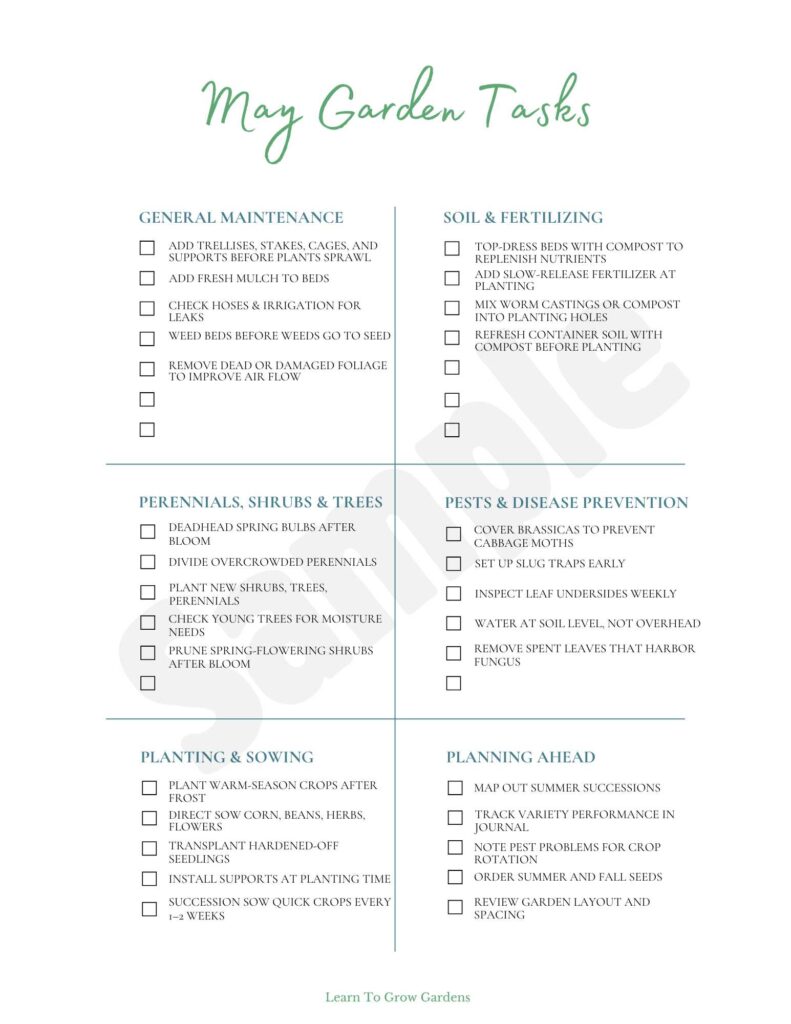
Printable May Checklist
Be sure to grab my Printable May Checklist. It’s prefilled with the garden tasks mentioned above, along with space to jot down your own. It’s a great addition to keep in your garden planner. Don’t have a planner yet? Check out my Garden Planning Starter Kit, and keep your garden organized all year long.
Final Thoughts on May Gardening
I hope you enjoyed these garden tips for May, and found them helpful. May is a full and exciting month in the garden, and a little planning helps everything run more smoothly. With warm-season crops going in, perennials waking up, and pests becoming more active, it’s one of the busiest (but also one of the most rewarding) times of the year. Take it one task at a time, keep notes as you go, and enjoy watching your garden explode with new growth.
When you’re ready for next month, you can head over to June Garden Tasks to stay on track with the season.
And be sure to grab your printable May Garden Tasks Checklist here.

Hi, I’m Liz! I’m a Master Gardener, Garden Coach, and Professional gardener. I’m also a mom of 4 who likes to putz around in my garden, growing food and flowers. You can read more about me here.
I started Learn To Grow Gardens as a resource for anyone looking to find more success in the garden. You can find gardening help, inspiration, and community through my Facebook Group or by joining my email list below.